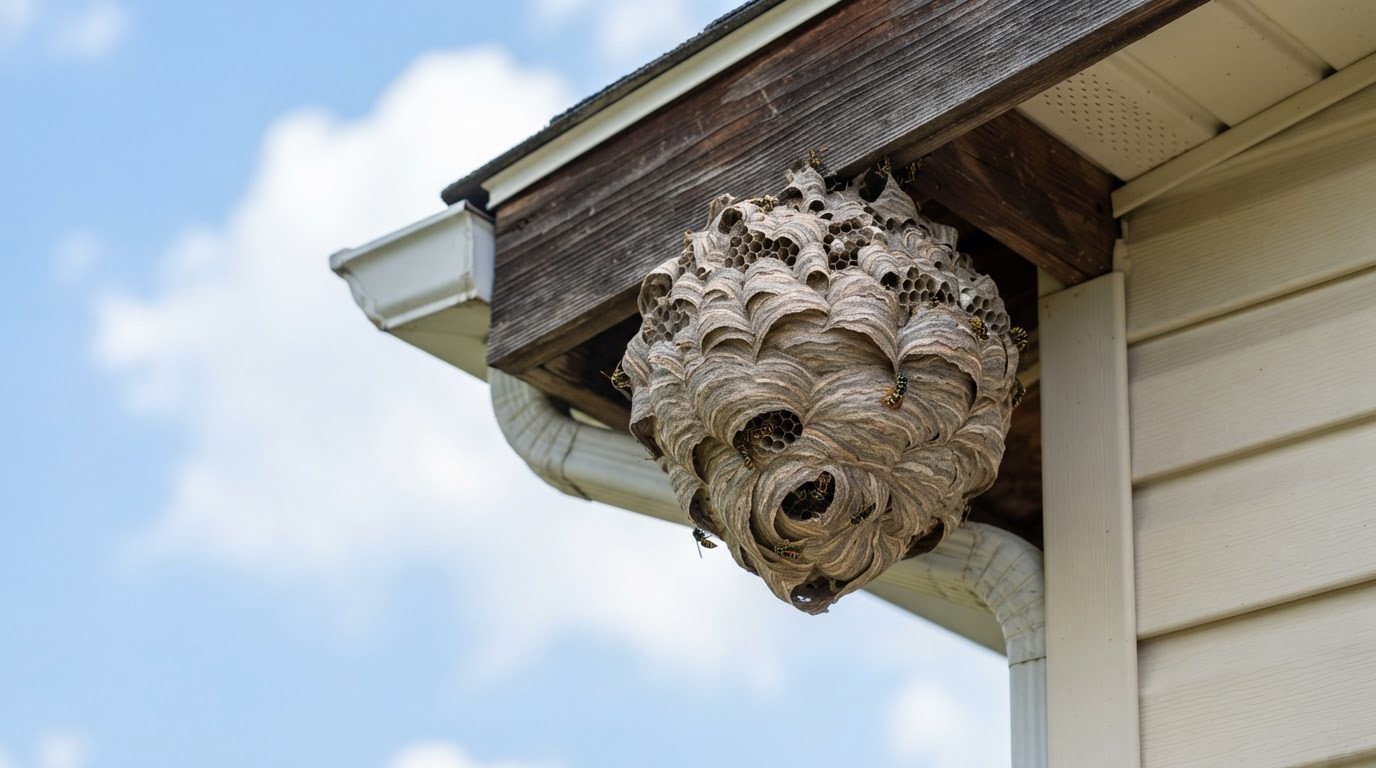
Wasp Nest Removal in Seattle, Washington
Safe treatment and full removal of paper wasp and yellowjacket nests from eaves, attics, and wall voids.
Wasp Nest Removal in Seattle
Wasps and yellowjackets are the stinging insects most likely to nest right where Seattle households live and eat — under eaves, in attics and wall voids, and in the ground near lawns and patios. Unlike honeybees, wasps are aggressive defenders of their nest, and a mature colony can sting repeatedly. Nest removal means treating the colony and then physically clearing the nest so it doesn't get rebuilt.
Queen B Bee Hive Removal Seattle treats and removes wasp and yellowjacket nests across Seattle and the surrounding King County area. We identify the species, locate the nest, choose a treatment that suits its location, and then remove the whole structure so the paper material and any larvae don't attract pests or a new queen back.
Every wasp nest job starts with an assessment of the species, nest size, height, and access. From there we recommend the right treatment and explain the work before we start.
Telling wasps from bees
Paper wasps build small open-comb nests under eaves and overhangs and are defensive close to their nest. Yellowjackets are more aggressive, nest in the ground or in wall voids, and are the wasps most likely to disrupt a backyard barbecue. Bald-faced hornets are technically aerial yellowjackets and build large enclosed paper nests — those are covered on our hornet nest removal page.
Honeybees are fuzzy, slower, and nest in cavities with wax comb. Wasps are sleeker, more angular, and build paper nests from chewed wood fiber. The right removal method depends on which insect you actually have, so identification comes first.
Where wasp nests build around a property
Nest location drives the method. A visible hanging nest under an eave is straightforward to treat and remove; a ground nest or a colony inside a wall void takes a different approach because the nest isn't visible and the entrance is the only access point.
Eaves, overhangs, and porch ceilings
What and where: an exposed paper nest hanging under a roof eave, deck overhang, porch ceiling, or shed lintel — the most visible and most common wasp nest.
How: we treat the nest to neutralize the colony, then remove the whole paper structure from the surface so it can't be reused or attract a new queen.
Outcome: the nest is gone, the surface is cleaned, and the entry pattern is checked to reduce the chance of a new nest rebuilding in the same spot.
Wall voids and attics
What and where: yellowjackets or paper wasps that have moved into a wall void, soffit, or attic, with bees seen entering and exiting through a gap or vent.
How: we treat through the entry point or an access opening to collapse the colony, then remove the nest material from the void where reachable and seal the entry gap.
Outcome: the colony is eliminated, the nest is cleared, and the entry point is sealed to reduce the chance of wasps rebuilding in the same void.
Ground yellowjacket nests
What and where: yellowjackets nesting in a hole in the ground — often an old rodent burrow — near a lawn, garden bed, or patio, with wasps streaming in and out of a small entrance.
How: we treat the ground entrance after dark when the colony is inside, then clear the nest material where it is accessible and discourage reuse of the burrow.
Outcome: the ground colony is eliminated and the entrance is filled or flagged to reduce the chance of it being reoccupied.
Treatment and removal method
Treatment comes first because a live, defensive colony has to be neutralized before the nest can be safely pulled down or opened up. We choose a treatment suited to the species and location — a hanging paper nest is treated directly, a ground nest is treated through the entrance, and a void nest is treated through the access point.
Once the colony is down, the nest itself is removed. Leaving a treated nest in place can still attract scavengers and gives a new queen a ready-made structure to reuse. For void nests, we clear the paper material where it is reachable and seal the entry so the void doesn't get reoccupied.
Timing across the season
Wasp and yellowjacket activity ramps up through summer. Early-season nests are small and the colony is manageable; by late summer and early fall, nests are at their largest and most defensive, and that is when most stinging incidents happen.
Removing a nest early in the season is a quicker, safer job than waiting until it is basketball-sized and the colony is at peak aggression. If you see wasps repeatedly entering the same spot, that is the moment to have it assessed.
Service area for wasp nest removal
We treat and remove wasp and yellowjacket nests across Seattle and the surrounding King County communities. Check our service areas page to confirm we reach your neighborhood.
Ready to get the bees handled?
Tell us where the swarm, nest, or colony is and what you're seeing. We'll assess the situation and schedule the right removal for your Seattle property.
Or call 206-672-6310Not sure which service you need? Compare all services.