Hornet Nest Removal in Seattle, Washington
Removal of large bald-faced hornet and aerial yellowjacket nests from trees, sheds, and high exterior points.
Hornet Nest Removal in Seattle
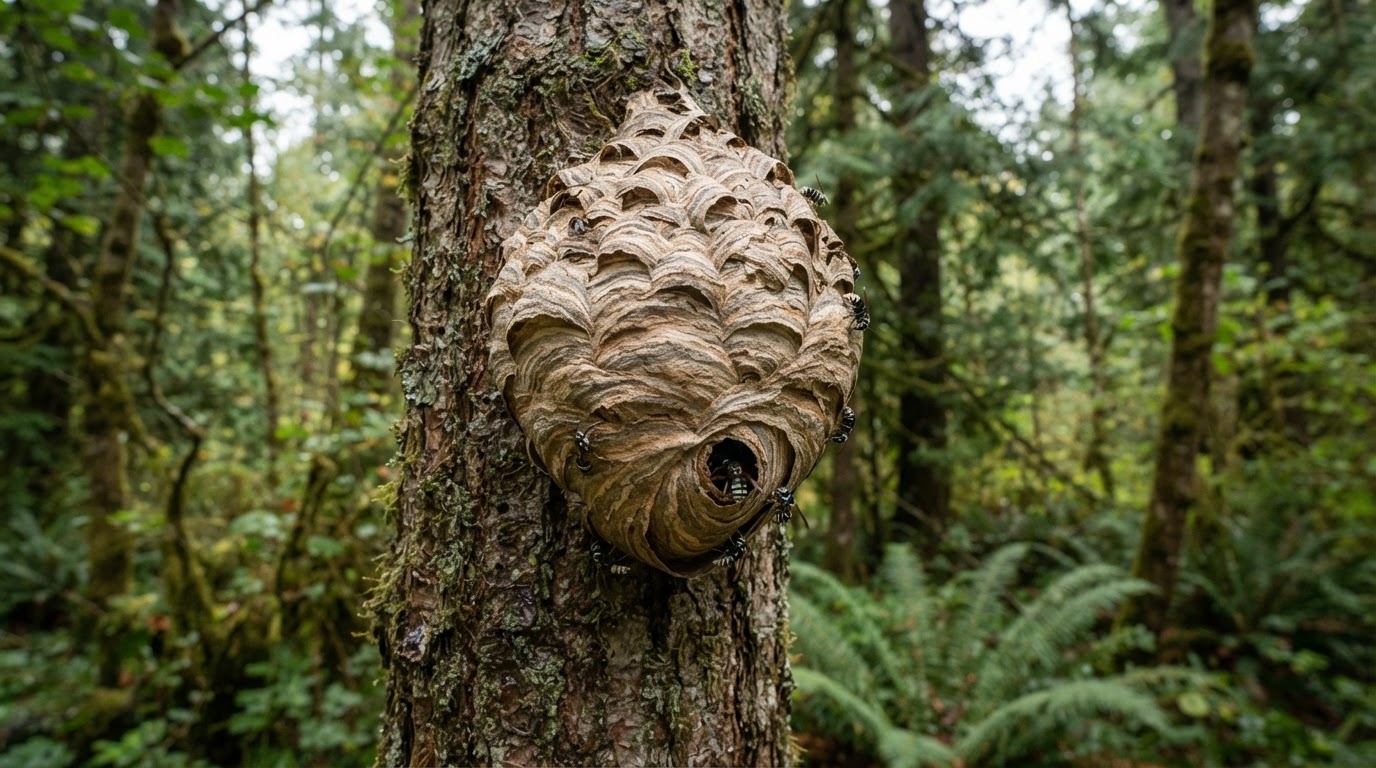
Bald-faced hornets and aerial yellowjackets build the large, enclosed paper nests that show up hanging from trees, shed rafters, and high eaves around Seattle properties. These nests can grow to the size of a basketball or larger, and the colony defends them aggressively — a hornet nest near a walkway, play area, or entrance is a genuine safety hazard, not just a nuisance.
Queen B Bee Hive Removal Seattle removes hornet and aerial yellowjacket nests across Seattle and the surrounding King County area. We treat the colony to neutralize it, then take down the full nest and clear the attachment point so it doesn't get rebuilt.
Every hornet nest job starts with an assessment of the nest's size, height, and attachment, because a large nest high in a tree is a very different job from one under a shed overhang.
What hornets are and how they differ
Bald-faced hornets are technically a type of aerial yellowjacket, not a true hornet. They are black and white, larger than a yellowjacket, and build the big grey paper nests you see hanging in trees and under eaves. They are also more aggressive than most wasps and will sting repeatedly to defend a nest.
Because the nest is enclosed, you usually can't see the comb or the colony — you see the paper shell and the hornets entering and exiting through a single opening near the bottom. The colony inside can number in the hundreds by late summer.
Where hornet nests appear
Hornet nests attach to whatever gives them height and shelter. The location changes how we access and remove the nest, so we assess it before recommending a method.
Trees and high branches
What and where: a large paper nest hanging from a tree branch, often ten or more feet up, in a yard or along a property line.
How: we treat the nest at height using ladders and reach equipment to neutralize the colony, then take the nest down whole and clear the branch attachment.
Outcome: the nest is fully removed from the tree and the attachment point is cleaned to reduce the chance of a new nest rebuilding on the same branch.
Sheds, outbuildings, and eaves
What and where: a hornet nest attached under a shed roof, inside an outbuilding, or under a high house eave near an entrance or walkway.
How: we treat the colony in place, then remove the nest from the structure and clean the attachment surface.
Outcome: the nest is gone, the surface is cleared, and the defensive colony at head height is removed. We'll explain any access or activity guidance from the assessment before you use the area again.
Removal approach for hornet nests
A hornet nest is treated before it is removed because the colony will defend the nest the moment it is disturbed. We treat to collapse the colony, wait for it to take effect, then cut the nest down and bag it. For nests high in trees, that means ladder and reach work to get to the attachment point safely.
The nest itself is removed entirely. A treated nest left in place can still attract scavengers and gives a new queen a ready-made structure to reuse the following season, so clearing it is part of the job, not an extra.
Risk and timing
Hornets are the most aggressive of the stinging insects we handle. A nest near a doorway, play structure, or walkway is a higher priority than one deep in a tree line away from traffic, and a large late-season nest is more dangerous than a small early one.
Like other wasps, hornets build through the season and peak in late summer and early fall. A nest caught early is a smaller, safer removal; a mature nest is a bigger job with more defensive hornets on site.
What to tell us when you call about a hornet nest
The more we know before we arrive, the better we can plan the access and bring the right gear. Tell us where the nest is — a tree, a shed, an eave — and roughly how high. A nest you can see from the ground is a different job from one ten feet up in a tree.
Size and activity help too: how big the paper shell looks, how many hornets you see coming and going, and whether it's near a doorway, walkway, or play area. A photo from a safe distance helps, but we confirm what we're dealing with on site rather than identifying a species from a photo alone.
Don't disturb the nest or try to knock it down before we arrive. A disturbed colony is more defensive and harder to treat safely, and knocking a live nest down scatters angry hornets through the yard where they're harder to contain.
Service area for hornet nest removal
We remove hornet and aerial yellowjacket nests across Seattle and the surrounding King County communities. Check our service areas page to confirm we reach your neighborhood before booking.
Ready to get the bees handled?
Tell us where the swarm, nest, or colony is and what you're seeing. We'll assess the situation and schedule the right removal for your Seattle property.
Or call 206-672-6310Not sure which service you need? Compare all services.